The gaze, a true engine of intrigue and visual storytelling, transforms “Portrait of a Lady on Fire” into a vibrant work where each silent exchange becomes a palpable emotion. In this film, directed by Céline Sciamma in 2019, painting is not merely an art form but a bridge of intimacy conveying deep desire and constant revelation. The female characters emerge as complex figures, where the gaze eventually unravels the tensions of a predetermined fate. This moving face-to-face encounter between Marianne, the painter, and Héloïse, her muse, embodies more than just a simple love story: it redefines the way a woman is filmed and the gaze directed at her.
In the following paragraphs, discover the reasons why this film stands out among the must-see films in theaters in 2025, and how the revolution of a fresh gaze on the female condition elevates cinematic storytelling. A dive into the heart of feminist romanticism illuminated by artistic, narrative, and emotional choices that disrupt the conventions of traditional cinema.
Portrait of a Lady on Fire: The Keys to a Revolution of the Gaze in Cinema
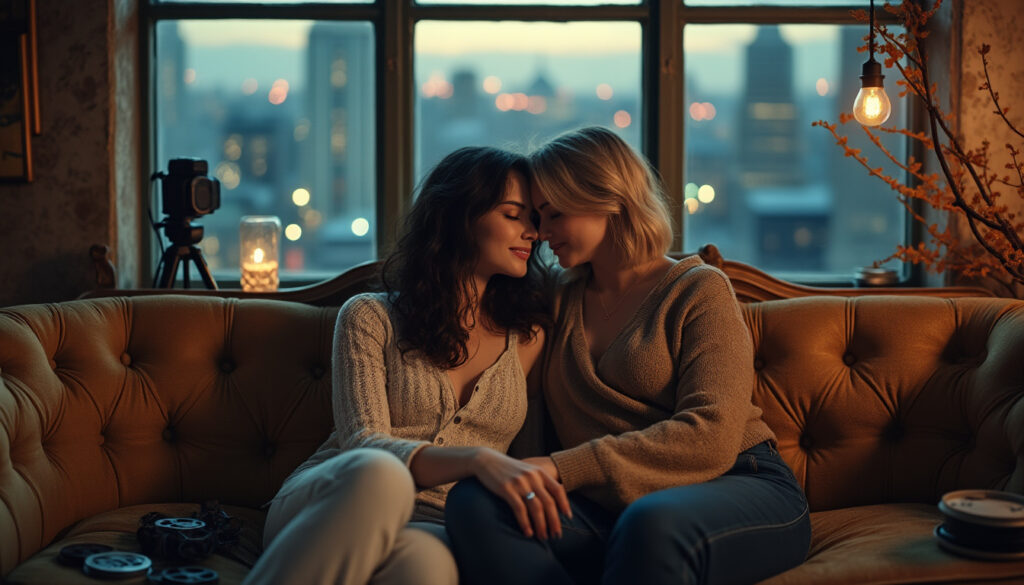
1. Mutual gaze as a gesture of equality and sisterhood: The film illustrates how the exchange of glances between Marianne and Héloïse alters the dynamics of power and shatters the usual patriarchal vision, transforming painting into a space of equality and mutual recognition.
2. Between fetishization and regained humanity: Through the lens of painting, the film deconstructs the traditional male gaze to offer a female perspective, where the woman’s body ceases to be fragmented to finally reveal her interiority.
3. A visual narrative driven by the intimate and the invisible: The camera captures the smallest details, oscillating between the visible expression of emotions and what remains invisible or suggested, giving the work a depth that is otherwise rare.
4. Desire and emotion transcended by a portrait: The painting, far from being a simple image, becomes the crucible where desires and affection crystallize, establishing a strong and subtle narrative tension.
5. A reflection on freedom, sisterhood, and the future: The film engages in a conversation between romanticism and feminism, inviting us to rethink outdated social models and to embrace a redefined brotherhood as sisterhood.

How to Reproduce the Magic of the Gaze in Visual Storytelling
- Establish a strong visual face-to-face: Invite characters to meet without barriers, at eye level, to create an authentic connection.
- Favor close-ups of the gaze and expressions: Use the camera to capture subtle emotions and tensions invisible to the naked eye.
- Disrupt the fragmentation of the body: Avoid shots that reduce the woman to detached parts, to prevent fetishization and promote an integral and respectful vision.
- Leverage silence and the unsaid: Let the images speak and gestures convey the intensity of desire and emotion.
- Stage shared intimacy as a narrative engine: Build scenes where visual proximity is synonymous with complicity and truth.
Alternatives and Limits of the Gaze as a Narrative Engine in Cinema
If “Portrait of a Lady on Fire” uses the gaze as a primary source of emotion, other works opt for different approaches. Some films rely more on dialogue or internal monologue to express the psychology of characters. Thus, works like “Pan’s Labyrinth” favor a symbolic and visual universe where mystery sometimes supersedes direct intimacy.
Moreover, the revolution of the gaze promoted by Céline Sciamma may encounter limits in highly codified genres like thriller or action where emotion is often translated more through physical action than through the unsaid. Finally, asserting that everything can be conveyed through the gaze may also mislead some viewers less sensitive to the subtle details of facial expression and exchanged glances.
Choosing to invest the gaze as the primary narrative vector thus presumes a precise targeting of the audience and a controlled writing process, which justifies the exclusivity and strength of a work like “Portrait of a Lady on Fire”. For the viewer willing to be carried away, the experience reveals a new way to intensely experience emotion in cinema.
Ultimately, this film invites us to rethink our own gaze, questioning how we see and how we are seen. The next time you set your eyes on a portrait or an intimate scene, remember this silent revolution: the shared gaze is the engine of a narrative full of life and truth.