Palette Film: Understanding this Cinematic Phenomenon in 2025
The “palette film” refers to a form of creation that combines a new aesthetic — a deliberately marked visual palette — with technical and narrative devices based on immersive technology and augmented reality. In 2025, this cinematic phenomenon stands out as an inventive response to traditional practices: it gives materiality back to the image while opening the door to film interactivity and a remodeled viewer experience. The result is a hybridization between artistic installation, narrative video game, and traditional cinema screening, where the innovative storytelling is designed for both the screen and the space and interaction.
This article explains why the palette film changes the game for festivals, theaters, and independent creation. It describes common technical tools, the growing uses in theaters and online, and offers concrete advice for those wishing to produce or experience this evolution of cinema. Through examples and case studies, it becomes easier to distinguish what is a passing aesthetic trend and what signals a lasting transformation of cinematic practice.
- What: fusion of a colorful aesthetic and immersive tools (AR, spatialized sound, interactivity).
- Why now: search for tangible experience in the face of digital saturation.
- Where to see: festivals, theaters equipped with PLF, museum installations, and hybrid platforms.
- Takeaway: the palette film questions the boundary between spectator and participant.
Definition: What is a palette film and why is it becoming a cinematic phenomenon
The term palette film describes works that blend strong chromatic intention (a dominant “palette” visual) and immersive devices. This aesthetic is not purely decorative: it engages perception, serves the dramaturgy, and facilitates the integration of digital layers such as augmented reality. In its most advanced version, the palette film reconciles tangible image (film, texture, physical objects) and interactive elements that modify the duration or point of view of the narrative.
The cinematic phenomenon is also nourished by a partial rejection of all things digital. After years of hyper-realistic rendering and automation, filmmakers and collectives are experimenting with the materiality of the image, overvaluing it, and mixing it with immersive devices to enhance emotional impact. This hybridization then becomes a major pathway for the evolution of cinema.
Key phrase: the palette film is defined by its ability to make color and the body of the image full-fledged dramaturgical actors.
Audience and Relevant Contexts: Who Benefits Most from the New Cinema Aesthetic 2025
The palette film appeals to several audiences: festival-goers in search of novel experiences, young viewers familiar with interactive codes, cultural institutions looking for adaptable formats, and independent creators for whom the visual palette becomes a signature.
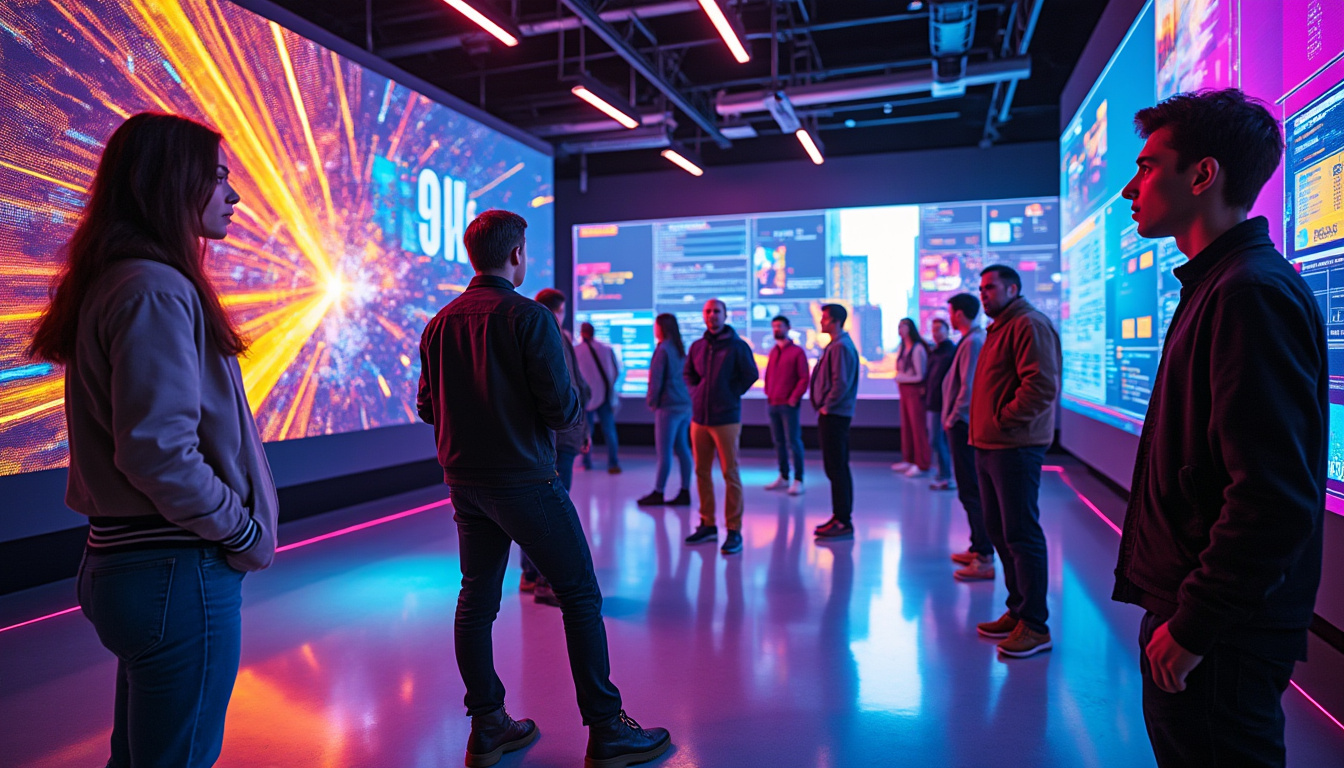
The privileged contexts are hybrid events (festivals-installations), theaters equipped with immersive technology (3D sound, multi-channel projection), and outdoor devices (exhibitions, heritage sites). Traditional theaters that adopt these formats invest in new infrastructures to offer a differentiating viewer experience.
Key phrase: the palette film finds its strength in hybrid spaces where technique and audience co-create the experience.
Advantages, Limitations, and Points of Attention of the New Aesthetic
The palette film offers immediate benefits, but it also raises technical and artistic challenges. Here are the main elements to consider.
- Advantages: strong visual identity, increased immersion, differentiation in theaters, new monetization models through paid experiences.
- Limitations: technical costs, complexity of distribution (theater compatibility), risk of gimmickry if interactivity is not narratively justified.
- Points of attention: accessibility (non-equipped spectators), preservation of artistic integrity, data security for connected interactions.
| Element | Impact on the Viewer Experience | Practical Example |
|---|---|---|
| Chromatic Palette | Directs emotion and guides attention | Consistent use of cyans and magentas to intensify a dreamlike passage |
| Augmented Reality | Adds an interactive layer without breaking the narration | Display of historical annotations during a documentary scene |
| Spatialized Sound | Enhances physical presence and tension | Sound wave effect synchronized with a narrative explosion |
Key phrase: a successful new aesthetic combines artistic intent and practical concern for public reception.
Practical Modalities: How a Palette Film Works (Steps and Technologies)
The production of a palette film follows several phases: chromatic and narrative conception, choice of mediums (film, HDR sensors, projection mapping), integration of augmented reality elements, and testing in real conditions. Each step requires technical expertise shared among the director of photography, colorist, sound engineer, and AR developer.
Technologically, one often finds:
- Multi-channel projection and mapping systems;
- AR modules synchronized via mobile app or dedicated glasses;
- Audio mixing in Dolby Atmos or equivalent for immersive technology;
- Mixed use of film/digital to preserve the material of the image.
Key phrase: thinking about a palette film requires designing image, sound, and interaction as a single scenographic artifact.
Concrete Examples, Practical Cases, and Link with the Landscape of Cinema 2025
Several festivals and distributors have already experimented with these formats. Recent studies show changes in attendance habits and higher expectations regarding experience. To understand the structural impact, reading the Observatory of Film Distribution (2025 edition) provides useful data on audience reception, while insights on the future of filmmaking explain the technical innovations influencing these projects.
Concrete examples observed in 2025: devices where a mobile app allows the audience to choose a narrative angle, installations where color activates sound modules, and VIP screenings where AR reveals hidden information. These uses transform the screening into a participative event, and some distributors explore ticketing that varies according to the level of interaction.
Key phrase: practical cases show that palette film aligns with the eventization of cinema.
Practical Tips and Common Mistakes to Avoid When Creating or Experimenting with a Palette Film
To succeed with a project, it is better to prioritize narrative coherence rather than the accumulation of gadgets.
- Plan interactivity from the writing stage. If AR doesn’t add anything to the story, remove it.
- Test the contents in real conditions. The theater light and audience distance change everything.
- Prepare a “classic” version for showing in non-equipped theaters.
- Train the technical teams: colorists, sound engineers, and AR developers must speak the same language.
- Consider accessibility: audio/visual alternatives for audiences with disabilities.
Key phrase: good production discipline ensures that innovation serves the narrative, not the other way around.
Summary: Key Points and Next Steps for the Reader
The palette film is more than a trend: it crystallizes a search for materiality and public engagement that marks the evolution of cinema. To experiment with this format, it is advisable to start with a pilot short film and prioritize partnerships with equipped venues and festivals. Sector-specific readings and best practice catalogs help calibrate technical investment; for instance, a synthesis of practices and trends available on French Cinematic Practices in 2025 sheds light on audience profiles.
To draw inspiration from a corpus of similar films and installations, consulting a critical selection can be useful, such as the page dedicated to must-see films of 2025 or articles on the renaissance of analog photography to understand the return of materiality in the image.
Key phrase: test, measure, iterate — the experimental approach remains the best path to mastering this new terrain.
What differentiates a palette film from a classic film?
A palette film combines a strong chromatic intention and immersive devices (AR, spatialized sound, interactivity) to transform perception and narrative writing. It is a project designed for the experience as much as for the image.
Do you need special theaters to screen these films?
Ideally yes to take full advantage of the devices (multi-channel projection, 3D sound, AR devices), but good practice is to provide a compatible version for classic theaters to broaden distribution.
What budget should be anticipated for a first palette project?
The budget varies widely: an experimental short can start with modest means if interactivity is simple, while a feature involving projection mapping and AR development will require higher funds. Planning tests and a lighter version remains strategic.
What artistic and technical risks should be anticipated?
Risks of gimmickry, technical incompatibility, cognitive overload for the viewer, and accessibility barriers. The solution lies in narrative coherence and real theater testing phases.