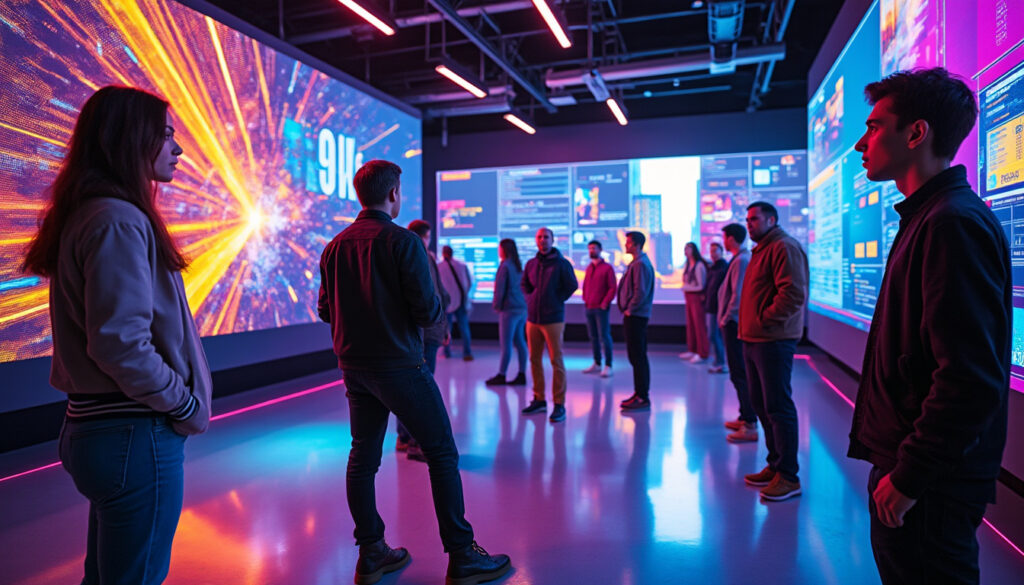
Cinema, this fascinating art form that combines image and sound, is undergoing a transformation thanks to revolutionary technological innovations. In 2025, the emergence of films using one-way mirror film radically changes the cinematic landscape. This technology, which allows for entirely new viewing experiences, is felt in all aspects of the industry, from production methods to film consumption. It’s a fascinating dance between art and technology, a ballet where the viewer is both actor and observer. How does this technology impact the way films are made and perceived today? Let’s broaden our perspective on this exciting and surprising question.
One-Way Mirror Film Technology: What Is It?
To understand the impact of one-way mirror film on the film industry, let’s start by defining what this technology is. It works on a principle of reflectivity that allows for one-directional visibility. In other words, when this type of film is applied to a surface, a person on one side can see what is on the other side, but not vice versa. Imagine the possibilities that open up for filmmakers! This innovation paves the way for more complex and interactive scenarios.
The one-way mirror film has several applications in the field of cinema. For example:
- 🔍 Creation of immersive sets: By using this film, directors can create environments where characters interact with invisible elements, thereby increasing viewer immersion.
- 🎥 Hidden filming sequences: Production crews can capture natural reactions from actors or extras, adding authenticity to their performances.
- 🎭 Theatrical experiences: Shows using this film offer a new way to engage with the audience, making scenes more dynamic.
In a world already saturated with ideas, the one-way mirror film brings a touch of innovation that energizes modern cinematic productions. It is remarkable to see how technologies adapted from everyday life enter the seventh art to transform it, and the one-way mirror film is a perfect example.
| Applications of One-Way Mirror Film | Description |
|---|---|
| Creation of Immersive Sets | Used to enhance filming environments and offer a new visual experience. |
| Hidden Filming Sequences | Allows for the capture of natural reactions, making scenes more authentic. |
| Theatrical Experiences | Facilitates hybrid performances, engaging the audience in an interactive way. |
Impact on Film Production
The one-way mirror film not only enriches the visual experience but also redefines the mechanics of film production. In 2025, studios adopt it to optimize various stages of development. For example, the pre-production process becomes smoother thanks to simulation technologies that allow directors to visualize their ideas before filming. These innovations facilitate the adjustment of scripts and scene planning, making the process more efficient.
In an industry where time is money, the impact is significant:
- ⌛ Optimization of timelines: Productions can start faster and with fewer unforeseen events, thus increasing return on investment.
- 💼 Simplification of logistics: This film allows for the reduction of some costs related to set construction, as visual effects can be integrated more easily.
- 🎬 Creative flexibility: Creative teams can experiment without the burden of traditional logistics, fostering innovation.
With these new tools, directors like those from NoirBlanc Studios envision groundbreaking films that engage the audience more. The economic impact of this production method is striking, and the future of cinema seems clear, reconciling artistic dreams and technological efficiency.
| Advantages of One-Way Mirror Film in Production | Implications |
|---|---|
| Optimization of timelines | Speeds up production |
| Simplification of logistics | Reduces set costs |
| Creative flexibility | Encourages innovation and experimentation |
Evolution of the Viewer Experience
In the era of one-way mirror film, the viewing experience transforms profoundly. Interaction and engagement take precedence over mere watching. By integrating interactive elements, this technology allows viewers to become active participants. Films are no longer stories passively absorbed, but narratives where the audience takes part in the action.
Here’s how this technology evolves the viewer experience:
- 🎮 Enhanced interactivity: Viewers can interact with narratives, influencing the course of the story.
- 🌀 Total immersion: With projections that incorporate 3D elements, audiences are plunged into entirely new worlds.
- 👀 Variety of experiences: Productions adapt content based on real-time feedback, creating unique experiences for each screening.
Cinephiles can thus appreciate productions like those created by CinémaVision, which push the boundaries of what we think we know about the seventh art. The ability to influence the narrative and be physically integrated into the film universe transforms the cinema into a space of collective creativity.
| Aspects of the Evolution of the Viewer Experience | Examples |
|---|---|
| Enhanced Interactivity | Events where the audience chooses the narrative path |
| Total Immersion | Screenings that incorporate interactive 3D projections |
| Variety of Experiences | Alternative versions based on viewer feedback |
The Challenges of Adoption
Despite all the advantages presented by one-way mirror film, its adoption is not without challenges. Studios must navigate through a sea of uncertainties to integrate this technology into their processes. In particular, financial, technical, and artistic implications represent obstacles to overcome.
The challenges include:
- 💰 Implementation costs: Initial investments to integrate these technologies can be significant.
- ⚙️ Staff training: Teams need to be trained in using these new systems to fully benefit from them.
- 📈 Technological shelf life: The rapid pace of innovation requires frequent updates to stay current.
To tackle these challenges, companies like FilmClair are working to make these technologies accessible while supporting creators in their digital transformation. The goal is to enable a smooth adoption and remove obstacles that could hinder progress.
| Challenges of Adopting One-Way Mirror Film | Sub-aspects |
|---|---|
| Implementation costs | Potentially high initial investments |
| Staff training | Need to train teams in new technologies |
| Technological shelf life | Requirement for continuous system updates |
What is one-way mirror film?
It is a type of film that allows for one-directional visibility, offering innovative cinematic experiences.
How does one-way mirror film impact production?
It optimizes timelines, reduces certain costs, and allows for enhanced creative flexibility.
What opportunities does this provide for viewers?
Viewers can interact with narratives, creating an immersive and unique cinematic experience.
What challenges does this technology present?
Adopting this technology involves implementation costs, the need for staff training, and frequent updates.
Where can we see films using this technology?
Studios like NoirBlanc Studios and CinémaVision are turning to this technology for their productions.