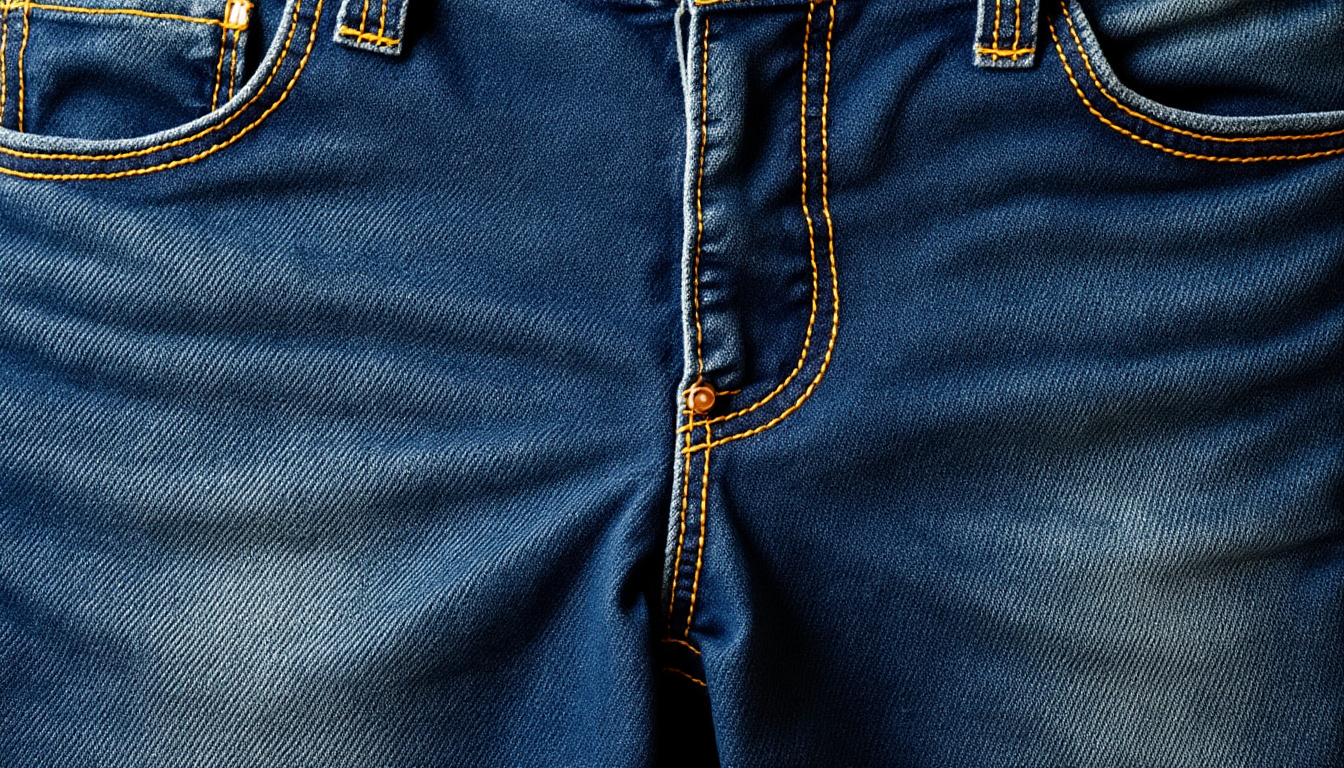
- History of denim reinterpreted through a contemporary workshop.
- Canvas jeans: origin, evolution, and local renaissance.
- Sustainability and eco-responsible fashion: criteria for choosing an ethical garment.
- Practical guide to recognizing a genuine made in France jean and how to care for it.
The long road of denim crosses oceans and workshops: from the fabric used by the sailors of Genoa to the weavers of Nîmes, the history of denim is also that of a fabric that has reinvented itself. In this text, the journey of Sandrine, a young seamstress who is reviving local artisanal production, serves as a common thread for understanding why canvas jeans remain a cornerstone of the modern wardrobe. The stakes are multiple: quality, sustainability, environmental impact, and transparency of production chains. Here you will find concrete guidelines to distinguish a truly ethical product, clear steps of production, practical examples drawn from Sandrine’s workshop, and tips for extending the life of your pieces.
This report-guide sheds light on both the ancient history of denim and contemporary practices in sustainable fashion. It helps to decide whether an investment in an ethical garment is worth the cost, and how, with a few simple gestures, to transform a jean into a resistant and unique piece. At the end of each section, a key idea highlights the essentials to remember.
Understanding the origin of canvas jeans: between Genoa and Nîmes
The word “jean” refers to a robust fabric, historically used by Genoese sailors and valued for its durability. Historical sources place the use of this fabric as early as the 16th century for sails and work clothing. For an encyclopedic summary of denim fabric, the reference page offers an overview of its uses and techniques.
At the same time, the city of Nîmes gave its name to the “serge de Nîmes,” from which the English term “denim” is derived. These two origins explain the duality of the name and uses, which range from popular clothing to cultural icons. This dual origin is the root of the universal appeal of denim.
Key point: understand that canvas jeans are both a maritime heritage and a textile product transformed by centuries of industrial and artisanal use.
From blue fabrics painted to work uniforms
Pictorial fragments and archives show the use of blue fabrics dyed with indigo as early as the 16th century, sometimes even as a pictorial support. These weavings, often made of cotton and linen, shared characteristics of robustness that made them garments for peasants and sailors.
Back to the history of denim and jeans
Key point: the robustness and indigo dye explain why canvas jeans have crossed social classes and centuries.
Who is interested in jeans today? Relevant audiences and situations
Three main profiles appear in Sandrine’s workshop: consumers concerned about buying sustainably, creators seeking authentic fabric, and collectors of craft pieces. Each seeks different guarantees: traceability, quality of the fabric, or artisanal signature.
Local brands and small French manufacturers respond to these expectations by favoring short circuits and certified materials. The market for sustainable textiles has expanded, now reaching a clientele that associates style with responsibility.
Key point: the demand for eco-responsible fashion is evident in both purchases and searches for engaged workshops.
Advantages, limitations, and points of attention of artisanal jeans
Artisanal jeans offer greater longevity and quality than mass production. The finishes, fabric density, and stitching ensure that the piece ages gracefully rather than deteriorating quickly.
On the other hand, local production involves higher costs and limited availability. Water usage and carbon footprint remain subjects to monitor, even for responsible productions.
| Criteria | Low-end jeans | Artisanal jeans (e.g. Sandrine’s workshop) |
|---|---|---|
| Origin of materials | International fabric, often untraceable | Local/organic cotton or traceable source |
| Sustainability | Rapid wear | Repairability and longevity |
| Water/CO₂ footprint | Up to 7,000 L of water | Generally reduced thanks to short circuits |
| Price | Low | Higher, justified by quality |
Key point: buying artisanal jeans means paying for artisanal production that prioritizes quality and sustainability over quantity.
How a jean is made: steps of artisanal production
The production of an artisanal jean consists of precise and mastered steps: fiber selection, weaving, dyeing, cutting, assembling, and finishing. Each step influences the garment’s lifespan.
- Choosing cotton or thread: favor organic cotton or local thread.
- Weaving: density and weave (twill) determine strength.
- Dyeing: natural indigo or controlled processes to limit wastewater.
- Cutting and assembling: precision of patterns and strength of stitching.
- Finishing: rivets, topstitching, and wear treatments done manually.
Key point: the artisanal mastery of each step guarantees an ethical and durable garment.
Practical case: Sandrine’s workshop and the relocation of production
Sandrine took over a small space and recreated a short chain: European cotton, weaving in the region, sewing in her workshop. This model reduces logistical steps and revitalizes old trades. Customers appreciate the transparency and the ability to customize their jeans.
A concrete example: a custom order that takes two weeks of work and direct communication between the client and the workshop. The result is a jean that respects morphology, repairs easily, and gains character over time.
Historical overview and vintage influences
Key point: relocation demonstrates that sustainable fashion is compatible with style, customization, and local economic viability.
Practical tips and mistakes to avoid to preserve a jean
Maintaining a jean prolongs its life and reduces the need to frequently repurchase. A few simple gestures can optimize its durability:
- Wash rarely and inside out to preserve the colors.
- Use gentle detergents and avoid intensive spinning.
- Repair immediately at the first sign of wear: reinforcements, mending, and alterations.
- Favor air drying and avoid the tumble dryer.
- Choose a workshop capable of providing spare parts or a repair service.
Common mistake: yielding to massive promotions without checking the manufacturing label. A cheap jean can be expensive in the long run.
Key point: simple gestures and a network of artisans ensure the longevity of a jean and confirm its status as a sustainable textile.
Practical references for learning more and verifying authenticity
To explore the history of denim and its variants, several resources offer documented and accessible perspectives. They relay both historical points and contemporary trends of made in France.
Consult historical syntheses and workshop narratives to better distinguish marketing from authenticity. These sources help identify a genuine made in France jean and understand the chain of commitment behind a product.
Detailed sheet on jean fabric
Report on the history and evolution of denim
Key point: check traceability, labels, and brand transparency before purchase.
How to recognize a genuine jean made in France?
Check for the mention “Made in France” on the label, the transparency of the production steps, and the price that is consistent with artisanal production. A reputable workshop details the origin of the cotton, the weaving, and the place of manufacture.
Is artisanal jean more ecological?
Often yes, when it is produced in short circuits and with controlled materials. Reducing transport and the possibility of repairing the piece decrease its overall footprint, even though dyeing and some steps still need optimization.
How long can a quality jean last?
With proper care and regular repairs, an artisanal jean can last several years, even decades. Longevity depends on the fabric, finishes, and usage habits.
What questions to ask a workshop before buying?
Ask about the origin of materials, the place of weaving, the production duration, the possibilities for alterations, and the repair policy. These elements reveal the sincerity of an eco-responsible commitment.
In conclusion, choosing a jean is more than an aesthetic choice: it is an act that connects history, craftsmanship, and ecology. Sandrine illustrates this: by prioritizing artisanal production and transparency, she transforms a utilitarian piece into an object of style and meaning. It’s up to you to act: ask questions, examine labels, and favor quality over quantity.