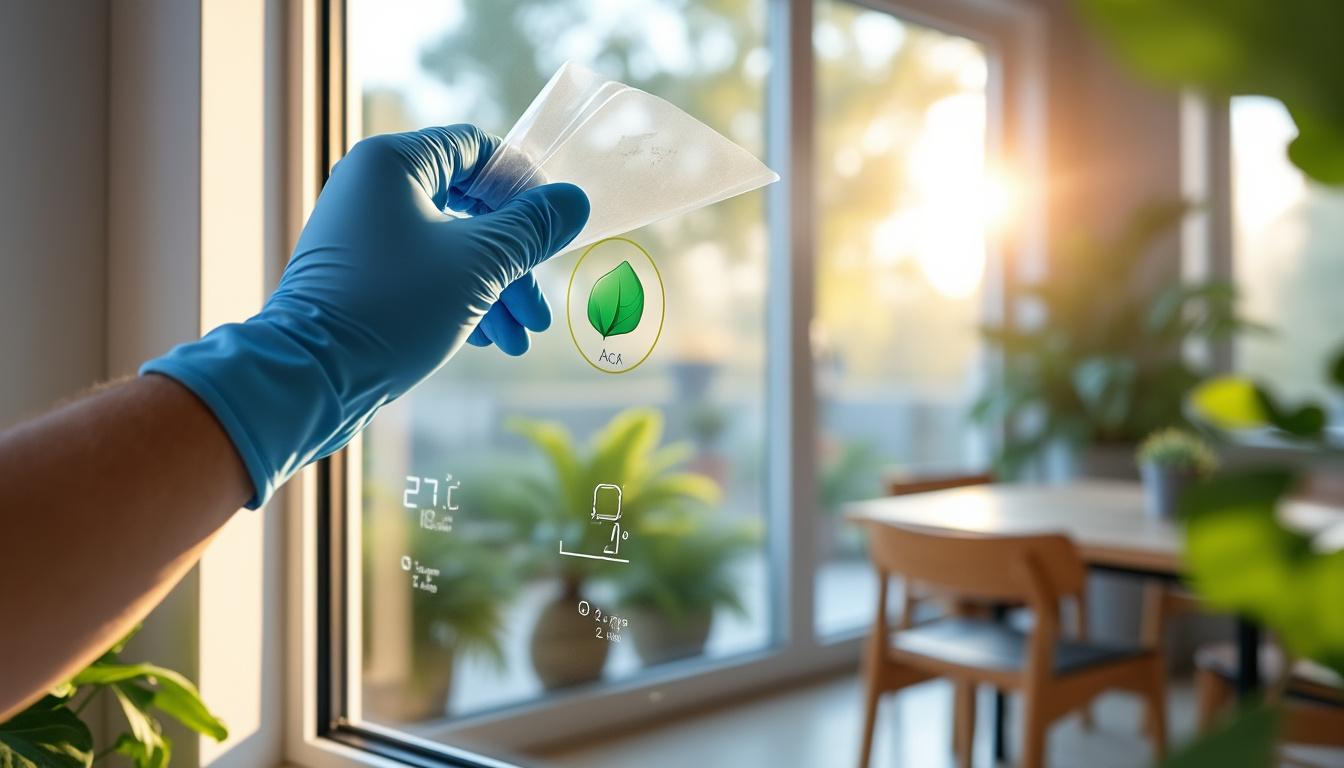
Reduce heating bills while maintaining a pleasant atmosphere indoors: this is an achievable goal for everyone with insulating window films! These little technological wonders offer a quick, efficient, and economical solution for those looking to improve the thermal insulation of their home. But how do you choose the film that best meets your needs? In this article, we will scrutinize all aspects: types of films, installation, maintenance, and benefits. Get ready to transform your windows into true barriers against cold and heat!
The different types of insulating window films
When it comes to insulating films, the first step is to understand the different options available. Each type of film has unique characteristics tailored to various insulation needs. In total, there are several categories, each with its own advantages.
Cold-resistant film
Particularly popular during the winter months, the cold-resistant film is designed to protect your interior from negative temperatures. By forming a barrier between the outside and the inside, it helps to reduce heat loss. With increased efficiency, this type of film allows you to maintain a comfortable temperature, even when the thermometer drops to icy levels.
Heat-resistant film
Conversely, when summer arrives with its heatwaves, it’s the heat-resistant film that comes into play. Capable of reflecting heat, it limits the entry of sunlight and helps keep the interior cool without heavily relying on air conditioning. Thus, it contributes to reducing energy consumption.
Four-season film
For those seeking a versatile solution, the four-season film combines the two previous functions. Suitable for use in all seasons, it strives to maintain a perfect balance between thermal comfort and energy savings throughout the year.
Reflective and tinted film
Reflective films have a surface designed to directly reflect part of the solar radiation, further contributing to energy efficiency. In contrast, tinted films provide a touch of privacy while reducing glare and protecting furniture from the harmful effects of UV rays.
| Type of insulating film | Optimal use | Key characteristics |
|---|---|---|
| Cold-resistant film | Winter | Reduction of heat loss ❄️ |
| Heat-resistant film | Summer | Reflection of sunlight ☀️ |
| Four-season film | All year round | Performance balance 🌍 |
| Reflective film | Summer | Limits heat entry 🌞 |
| Tinted film | All year round | Enhances privacy 🕶️ |
Criteria to consider when choosing insulating film
Choosing the right insulating film is not a decision to take lightly. Several criteria must be considered to make the best choice according to your needs and budget.
- Film thickness: The thicker the film, the better it insulates. A thickness of 0.1 mm is recommended for optimal effectiveness.
- Type of glazing: Depending on whether you have single, double, or triple glazing, the film’s effectiveness may vary. Make sure the chosen film is compatible with your type of glazing.
- Ease of installation: Opting for a self-adhesive film can make installation much easier and faster for individuals.
- UV resistance: Some films offer enhanced protection against UV rays, helping preserve your furniture and fabrics.
- Budget: Assessing the value for money is crucial. While high-quality films are often more expensive, their durability and effectiveness can justify the investment.
By considering these elements, selecting the ideal insulating film becomes much clearer and more suited to your specific needs. Sometimes, consulting experts or specialized guides, like this link, can also provide valuable insights.
Installing insulating film on windows
Once the type of film is chosen, the next step is to tackle installation. When properly applied, insulating film can transform your space. Here are some tips for successfully completing this step easily.
Surface preparation
Before application, it is essential to clean the glass. Use a mild cleaning product to remove any dirt that might affect the film’s adhesion.
Film application
Cut the film to the size of your windows, leaving a small excess. Spray soapy water on the glass to ease the sticking process. Once positioned, smooth the film with a squeegee to avoid air bubbles.
Finishing and maintenance
After installation, it is important to let the film rest to ensure good adhesion. Maintaining insulating film usually involves regular cleaning to preserve its effectiveness and appearance.
For more precise installation instructions, a visual guide such as this one can be very helpful.
Benefits of insulating window films
Insulating films are not just limited to thermal functions. They offer a multitude of significant benefits.
- 👷♂️ Reduction of heat loss: In winter, these films decrease energy losses, which can translate into savings on heating bills.
- 🌡️ Thermal comfort: Overall, more stable temperatures are noted, providing a certain comfort of life.
- 💰 Affordable cost: Compared to more expensive installations like double glazing, films offer excellent value for money.
- 🌞 UV protection: Furniture and fabrics are protected from fading due to sun rays.
- 🔧 Simple installation: Most films can be applied without the help of a professional, making their installation very accessible.
Is the insulating film easy to install?
Yes, installation is generally simple and can be done without professional tools. Just follow the instructions.
Do all insulating films offer the same level of protection?
No, each type of film has specific characteristics; some are better for winter, others for summer.
Can insulating films be easily removed?
Yes, most films can be removed without damaging the glass, as long as you follow the manufacturer’s instructions.
How long does an insulating film last?
With proper maintenance, an insulating film can last several years.
Can I apply insulating film to all types of glazing?
Most films are compatible with single and double glazing, but it’s advised to check before purchasing.